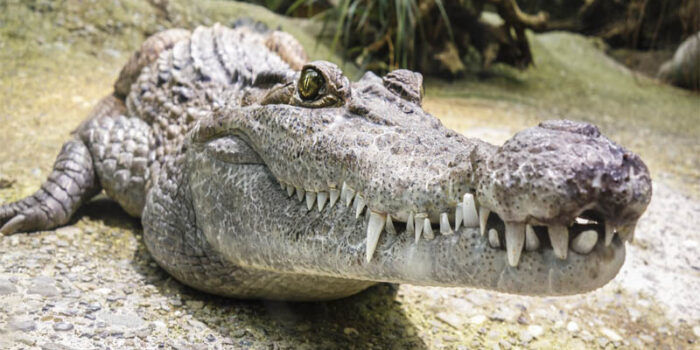
Alligators are large reptiles; they are close counterparts of crocodiles. But unlike crocodiles. They are found on almost all continents except Europe and Antarctica because they naturally only belong to the United States and China. There are around two alligator species related to American caimans, with huge and powerful tails that are used for swimming and defense as well. Their eyes, ears, and nostrils are placed on the top of their stretched head. They look different than crocodiles through their jaws and teeth. There are many more interesting facts about alligators and features of alligators which will surely increase your knowledge about them.
They have a broad U-shaped nose, and all the teeth of the lower jaw fit within the upper jaw. Its large fourth tooth is placed into a socket in the upper jaw. Usually, you can’t see its teeth when its mouth is closed. In contrast, crocodiles have a narrow V-shaped nose, and the large fourth tooth on each side of the lower jaw develops outside the nose, and you can easily see it when the mouth is closed. Alligators are carnivorous and live along the edges of water such as ponds, marshlands, and rivers and streams.
The average lifespan of alligators is around 50 years in the wild. However, they have lived in captivity for up to 70 years. Alligator is a Spanish term for “the lizard” because early Spanish explorers and settlers in Florida first gave them the name of the alligator.
10: Alligators Are Cold-Blooded Creatures
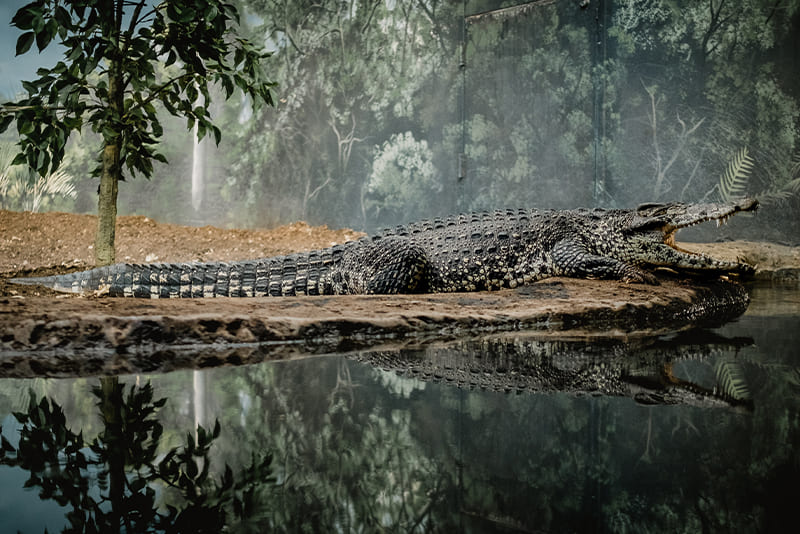
As you know, they mostly live in water; that’s why they are cold-blooded creatures, like other reptiles. One of the interesting facts about alligators is that, as cold-blooded creatures, they can’t regulate their body temperature internally like human beings and other warm-blooded animals. Due to this, they have a very slow metabolism, which lets them subsist for long periods without food. Interestingly, alligators can survive many months on a single large meal.
09: What Do Alligators Eat?
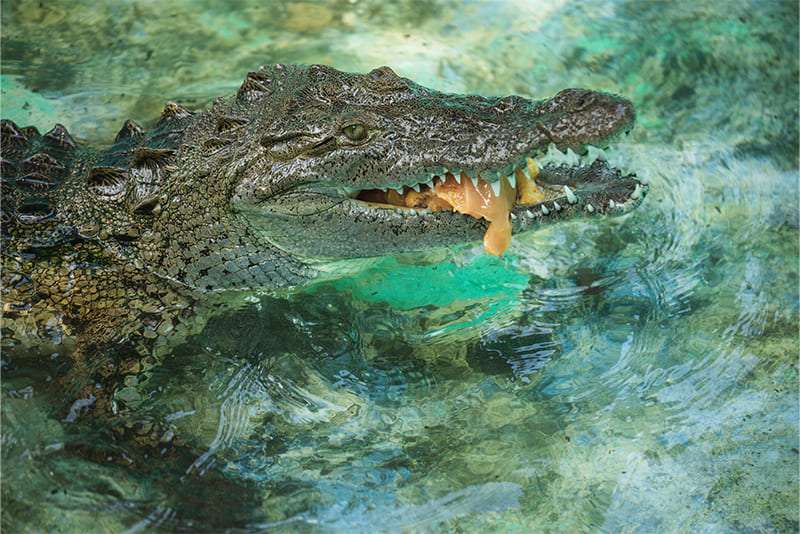
Alligators are carnivorous; their diet consists of any type of flesh. At a young age, they eat fish, pests, snails, shellfish, and larvae. As they become mature, they slowly and gradually start to eat large prey, including huge fish such as gar, turtles, and various mammals, predominantly muskrat, different birds, deer, and other reptiles. They also eat lettuce leaves and other leafy vegetation. Furthermore, interesting facts are that alligators have also been observed eating kumquats, citrus fruits, etc.
08: Alligators Have Excellent Night Vision
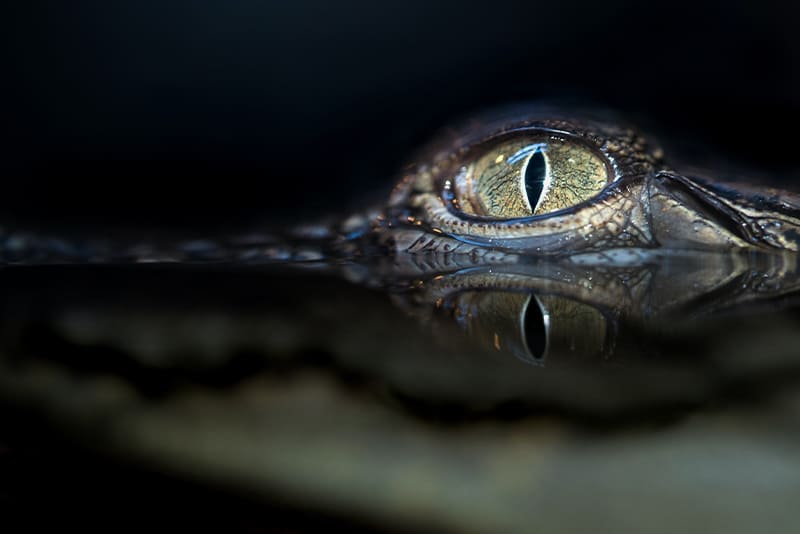
Alligators are nocturnal creatures; they have very good eyesight. They can even see better than other creatures at night. That’s why they mostly hunt at night.
07: How Much Can an Alligator Eat?
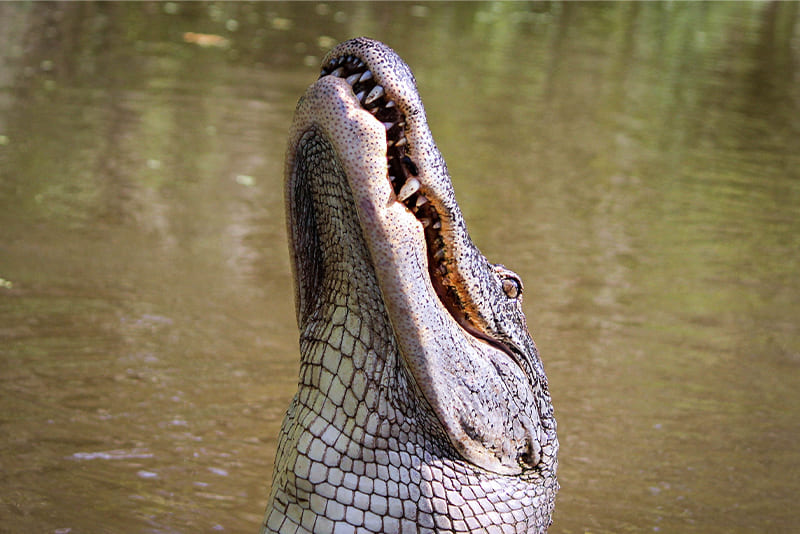
Juvenile alligators are one of the classes that can consume about 23 percent of their body weight in a sitting, which is comparable to 180-pound persons eating more than 41 pounds of steak in one meal. Plus, an interesting fact about alligators is that they have a slow metabolism rate, which helps them survive in the scarcity of food.
06: An Alligator’s Stomach Can Dissolve Bones
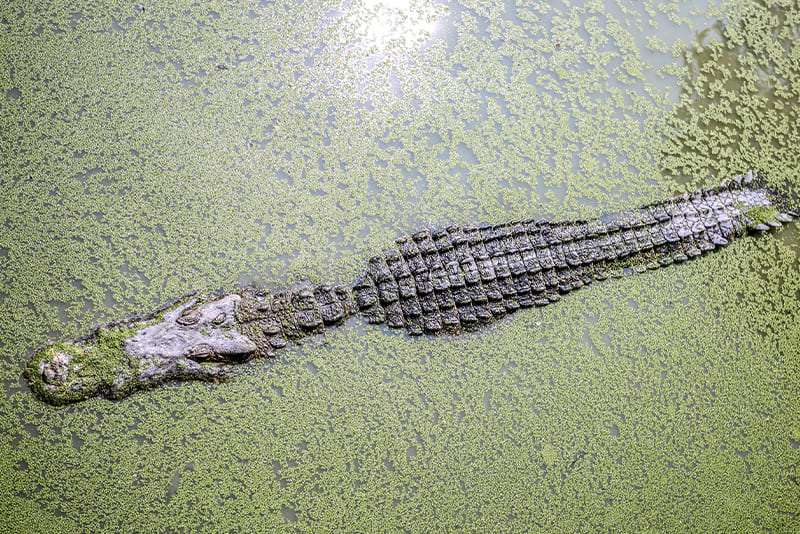
As you know, its stomach has unique acids which have a pH of less than 2—in the range of lemon juice and vinegar. Interesting facts that: prey can be digested in two to three days in an alligator’s stomach easily. Interestingly, bones and other hard parts can take just 13-100 days to disappear from its body. Plus, it has a strong immune system that can fight the most dangerous virus, HIV.
Their powerful digestive system is just one example of the unusual adaptations found among the world’s strongest animals.
05: Interesting Facts About Alligators: How They Use Tools to Catch Prey

Alligators are nocturnal creatures; they have very good eyesight. They can even see better than other creatures at night. That’s why they mostly hunt at night.
An alligator’s brain weighs approximately 8- 9 grams, which is the average size of a walnut, but it doesn’t mean they are stupid creatures. Interesting facts about alligators have been discovered using lures like tools to chase birds.
04: Alligators Are Generally Less Aggressive Than Crocodiles
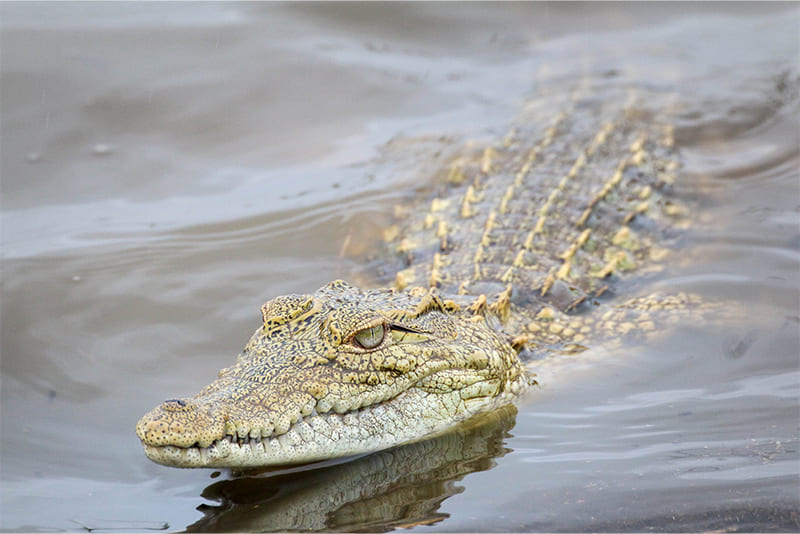
As crocodiles are close cousins of alligators, they are much less aggressive than their counterparts, particularly the saltwater crocodile. Generally, they are diffident towards human beings and tend to walk or swim away if one comes near. They do not show any aggression towards humans.
According to Britannica, many incidents began due to humans not when they began to capture it. Between 2000 and 2007, alligator attacks averaged just under 11 per year in Florida, and the death rate was less than 10%.
03: Why Feeding Wild Alligators Is Illegal
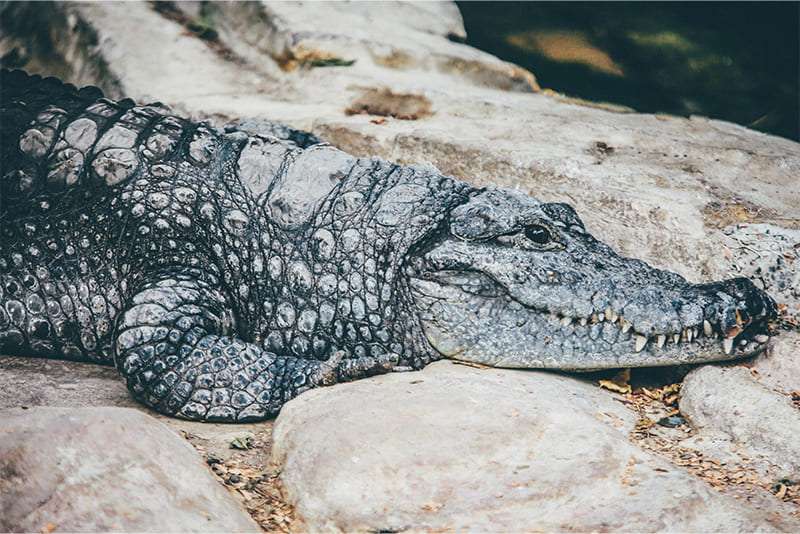
In Florida, it is illegal to feed alligators. If they are continuously fed, they will finally lose their fear of humans and will learn to make them their food. Therefore, it is dangerous for people and alligators.
02: Alligators Produce Tears Without Crying
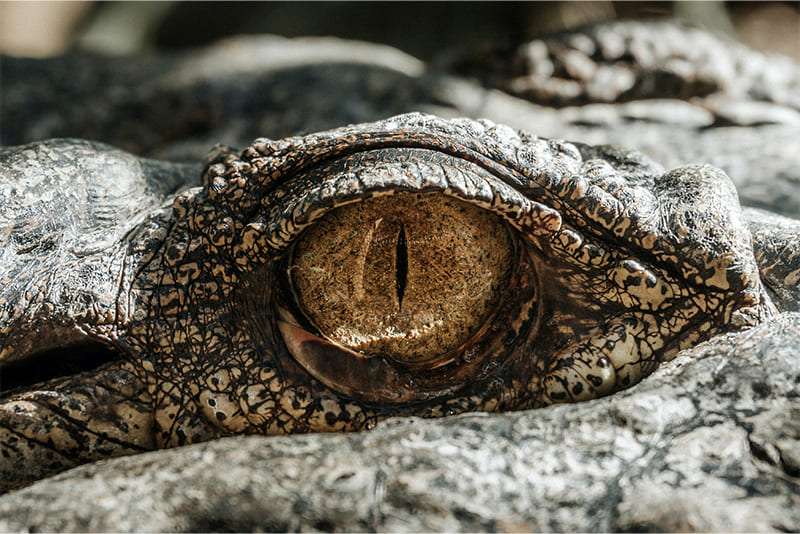
It is a fact that crocodiles produce tears; alligators also produce tears, but that doesn’t mean they are crying. While consuming food, they swallow too much air, which gets in touch with the lacrimal glands, which are responsible for producing tears. Interesting fact: alligators also produce tears to clean and moisturize their eyes.
01: Alligators Make Sounds to Communicate
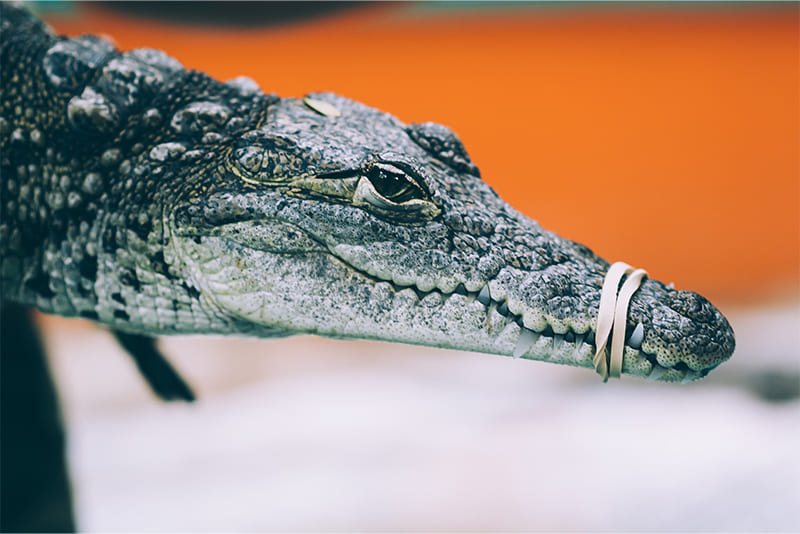
Alligators are among the animals that have no vocal cords like other reptiles. But an interesting fact is that alligators can make sounds like woodpeckers. They make sounds to call their mates or their young ones or fight off competitors—such as a rasping hiss or a frightening bellow.
| No. | Interesting Fact | What Makes It Interesting? |
|---|---|---|
| 10 | Cold-Blooded Nature | Alligators rely on their surroundings to help regulate body temperature. |
| 09 | Diet | They eat a variety of prey, with their diet changing as they grow. |
| 08 | Night Vision | Their eyes are well adapted to hunting and moving around in low light. |
| 07 | Eating Habits | Young alligators can consume a surprisingly large amount of food relative to their size. |
| 06 | Powerful Stomach | Strong stomach acids help them digest tough parts of their prey, including bones. |
| 05 | Tool Use | Alligators have been observed using objects as lures to help attract prey. |
| 04 | Behavior | Alligators are generally less aggressive toward humans than many crocodile species. |
| 03 | Feeding Wild Alligators | Feeding wild alligators can make them associate humans with food. |
| 02 | Tears | Alligators can produce tears while feeding, but this does not mean they are crying. |
| 01 | Communication | Alligators make different sounds to communicate with mates, young, and rivals. |
Frequently Asked Questions

SEO Expert | Founder of Depth World
Syed Aqib Bilal is an SEO & Digital Marketing Specialist and the Founder of Depth World. With extensive hands-on experience in search engine optimization, technical SEO, and content strategy, he specializes in building high-authority websites and driving sustainable organic traffic growth. Through Depth World, Bilal publishes well-researched, data-driven content focused on geography, world facts, natural wonders, and global discoveries.
With years of hands-on experience in search strategy, Bilal focuses on creating authoritative, reader-first content that simplifies complex topics and delivers accurate, research-backed information. His work aims to educate, inform, and make global knowledge accessible to everyone.
